Best E-Commerce Platform in Tunisia: Converty vs Shopify vs WooCommerce
Compare the best e-commerce platforms in Tunisia: Converty vs Shopify vs WooCommerce for COD, delivery, order management, analytics, and more.
Best E-Commerce Platform in Tunisia: Converty vs Shopify vs WooCommerce
Choosing the right platform for e-commerce in Tunisia can shape everything about how your store runs — from how quickly you launch, to how smoothly you handle cash on delivery (COD), to how much time you spend fighting your own tools instead of growing your business.
Three names come up most often: Converty, Shopify, and WooCommerce. Shopify and WooCommerce are global household names, but e-commerce in Tunisia has its own rhythm — COD is still king, delivery logistics are local, and order verification can make or break your margins. So how you choose the right platform depends on how the Tunisian e-commerce market works.
This guide breaks down all three so you can decide with confidence.
What Actually Matters When Choosing a Platform for E-Commerce in Tunisia
Before comparing features, it helps to step back and think about what your store genuinely needs day to day. A platform can have a lot of functionalities, but if it doesn't match your customer needs and how you operate, it will slow you down more than it helps.
For most Tunisian sellers, the essentials come down to a short list: solid cash on delivery management, straightforward order and delivery handling, a store you can set up without a developer, easy product and inventory control, built-in marketing and analytics, flexible payment options, room to scale, pricing that's transparent, and genuine support for the local market rather than a one-size-fits-all global template.
Keep that list in mind as you read through the comparison below.
Converty, Shopify, and WooCommerce at a Glance
| Feature | Converty | Shopify | WooCommerce |
|---|---|---|---|
| Easy store creation | ✅ | ✅ | ⚠️ Technical setup |
| Cash on Delivery | ✅ Built for COD | ✅ | ✅ |
| Order management | ✅ Built-in | ✅ | ⚠️ Requires setup |
| Delivery management | ✅ | ⚠️ Needs integrations | ⚠️ Needs integrations |
| No-code setup | ✅ | ✅ | ❌ More technical |
| Analytics | ✅ Built-in | ✅ |
Converty: Built Around E-Commerce in Tunisia
Converty takes a different starting point than the other two: instead of building a global platform and letting merchants bolt on local workarounds, it's designed around how e-commerce in Tunisia works.
In Tunisia, COD is how customers take their first leap of faith with an online store. It removes the barrier for buyers who aren't ready to pay upfront, and it gives merchants the chance to earn that trust before the money changes hands. The customer risks nothing until the parcel arrives — and that single dynamic is what opened e-commerce to the entire population, not just card holders.
But trust runs both ways. For merchants, COD is also the clearest signal they have for reading their order pool — the conversations, the tone, the way a customer responds when you call to confirm. That human moment, that brief exchange on the phone, isn't overhead. In a market where relationships still close deals, it's half the conversion.
The data backs this up: optimized confirmation calls cut return rates by 20 to 30%. Not a new feature. Not an ad budget. A conversation. CODRocket
One place to manage every order. Converty's built-in Order Management System (OMS) lets you add products, track orders, and run your operations from a single dashboard. There's no need to stitch together a website builder, a separate order tool, and a delivery tracker — it's already connected.
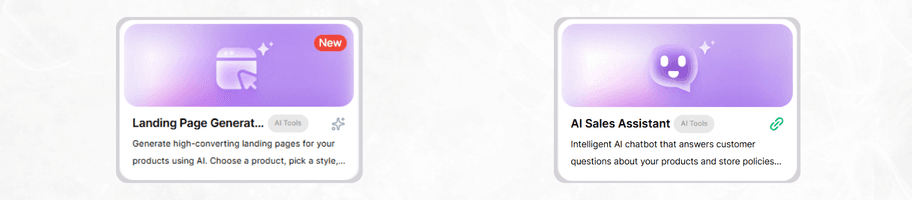
AI doing the repetitive work. Converty layers in AI-powered tools — an AI chatbot for customer support, AI order extraction, an AI landing page generator, and advanced analytics — so merchants can automate the busywork and spend their time on what actually grows the business.
Protection built for COD risk. Features like phone verification, IP filtering, country restrictions, and fraud detection rules give merchants a practical way to catch problematic orders early, protecting margins that COD businesses can't afford to lose.
Who it's built for: Tunisian e-commerce businesses, COD-based stores, first-time entrepreneurs, local brands, and anyone who wants an all-in-one platform without unnecessary technical overhead.
Shopify: A Powerful Global Platform
Shopify remains one of the most widely used e-commerce platforms in the world, and for good reason. It makes store creation genuinely easy, offers polished professional templates, and connects to a massive ecosystem of apps and marketing integrations. For merchants with ambitions beyond their home market, its scalability and international selling tools are hard to match.
The catch is that Shopify wasn't built with e-commerce Tunisia specifically in mind. Local necessities — COD workflows tuned to Tunisian delivery networks, for instance — often depend on third-party apps and external integrations rather than being native to the platform. That's manageable, but it adds setup complexity and can push costs up as your store grows.
Who it's built for: businesses targeting international markets, merchants who want access to a large app ecosystem, established brands, and anyone comfortable managing third-party integrations.
WooCommerce: Maximum Flexibility, More Technical Work
WooCommerce runs on top of WordPress, and that heritage defines its whole personality: near-total control over your site, thousands of plugins, and a large developer community to draw on. If you have the technical resources — or enjoy being hands-on with your website — that flexibility can be genuinely valuable.
The trade-off is real, though. WooCommerce leaves hosting, security, updates, plugin management, performance, and every payment or delivery integration in your hands. For a merchant focused purely on e-commerce Tunisia and moving fast, that's a lot of technical surface area to maintain just to keep the lights on, before you've even started marketing.
Who it's built for: businesses already on WordPress, merchants who need deep customization, and teams with developers on hand.
So Which One Is Right for E-Commerce Tunisia?
There's no universally "best" platform — only the best fit for your business model and priorities.
Choose Converty if you want a platform built specifically for the realities of e-commerce in Tunisia: strong COD support, integrated order management, delivery operations, and a setup that doesn't require a technical team.
Choose Shopify if your ambitions are global and you want access to the biggest app ecosystem on the market, even if that means layering on extra tools for local needs.
Choose WooCommerce if customization is non-negotiable and you have the technical resources to manage a WordPress-based store yourself.
Why Converty Resonates With Tunisian Sellers
Running a store isn't just about building an attractive website — it's about everything that happens after the customer clicks "order." COD confirmation, order tracking, fraud prevention, analytics, delivery coordination: these behind-the-scenes processes are what actually determine whether a sale turns into profit.
That's the gap Converty was built to close. Instead of asking merchants to duct-tape a website builder together with plugins, apps, and external services, it brings the core tools of e-commerce Tunisia — COD management, order handling, protection, and analytics — into one connected system.
Final Verdict
Shopify is a strong choice for global ambition. WooCommerce offers unmatched flexibility for technical teams. But for merchants whose priority is e-commerce Tunisia — cash on delivery, local logistics, and simple day-to-day order management — Converty is built around exactly that problem, not adapted to it after the fact.
If your goal is to launch and grow an online store in Tunisia, the less time you spend in front of a dashboard, the better. Converty is built around that idea — so merchants can focus on what actually moves the needle: finding the right products, crafting the right offers, and staying close to their customers.
The operational side — order verification, confirmation tracking, filtering out risky orders before they ever leave the warehouse — is already handled. Not as an add-on. Not as something you configure later. Built in, from day one.
Because the stores that win in Tunisia aren't the ones with the most sophisticated tech setup. They're the ones with the most time to listen.
If your goal is to launch and grow an online store in Tunisia without wrestling with unnecessary technical complexity, Converty is worth a serious look.
FAQ
Is Converty only for COD businesses? No. COD is a core strength, but Converty's order management, analytics, and AI tools support any Tunisian merchant, regardless of payment method.
Can I use Shopify or WooCommerce for e-commerce Tunisia and still support COD? Yes, both can support COD, but typically through third-party apps or custom integrations rather than as a built-in, ready-to-go feature.
Do I need technical skills to use Converty? No. Converty is designed as a no-code platform, so you can launch and manage a store without a developer.
Which platform is easiest for a first-time online seller in Tunisia? Converty and Shopify are both no-code and quick to set up; Converty has the added advantage of being tailored to local COD and delivery workflows from day one.
Is WooCommerce a good option for beginners? It can be, but it requires more technical involvement — hosting, plugins, and updates — so it tends to suit merchants who already have WordPress experience or developer support.
Ready to launch? Start building your online store with Converty — a platform designed around the needs of e-commerce Tunisia, so you can focus on selling and growing your business.